Showing posts with label agriculture. Show all posts

Tuesday, December 2, 2014

Oh my what has happened on the farm


What does a progressive farm look like? Consider the aspects of farms described by this New York Times article.
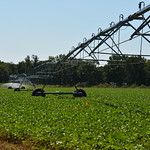
UD Irrigation Field Tour
  • Cloud computing
  • Data is everything (big data, data analysis, and shared and private data)
  • Potential robotics (weed detection)
  • Unmanned aerial vehicles (drones)
  • Satellite technologies: 
    • GPS
    • GIS
    • yield monitors (real time data on yield and moisture)
    • variable rate applicators (fertilizers, seed, and irrigation)
    • precision operations (inch accurate rows)
    • autosteer tractors (driveless)
    • electrical soil mapping
    • electrical charged soiled testing
  • Social media
  • Partnerships
What does this mean for agriculture in the United States? Possibly bigger farms and fewer diverse farms, which does not necessarily lead in a negative direction. It also means more information on environmental treatments and eventually leading to tracking food to its source.

Tom Farms recognizes, like most progressive businesses, that technology is used to garner and process lots of information for management decisions. Growth on these farms is dependent on managing and deciphering precise and massive amount of information. In part, Tom Farms' growth is enhanced by those farms that continue to look at using more inputs, fertilizers and horse power and are not utilizing the power of information.
Farmers still think tech means physical augmentation — more horsepower, more fertilizer,” Mr. Tom said. “They don’t see that technology now is about multiplying information.” With corn prices at almost half the level they have been in the past few years, “my growth is going to come from farmers who don’t embrace technology."
Enabling technology can also cause conflicts and adjustments in the way farmers work. Farmers tend to be very independent but with big data -- their own and their neighbors' data -- more information can yield benefits to all. On the flip side, there continues to be a need for proprietary control. Sharing data puts individual farmers at risk but also could yield benefits to them individually and collectively, similarly, much like other industries.
“We and the other farmers could pool all our harvest data in real time,” he said. “You think the big companies would like that? You bet they would. Farmers don’t trust that; they’re independent. Your neighbor is also your competitor.
The most competitive farms will utilize masses of precise information gathered via technology and are able to sift through and analyze these layers of data to make decisions. These farms will also use partnerships for strategic and collective benefit.

Saturday, April 24, 2010

Cooperative Extension and Social Media

Chris Raines, a meat scientist who uses @ITweetMeat as his Twitter handle, explained the importance of social media use in Extension.

He makes several points about Extension and our online work. Below, I am continuing the conversation.

  • Cooperative Extension’s 100 year history and purpose is to help improve lives through education.
  • Cooperative Extension is about changing for benefitting individuals and communities.
  • Cooperative Extension bases its education on research. Research, sometimes, can appear to conflict with other research. An example where research can lead to confusing recommendations is with sun exposure. Low Vitamin D can lead to fatigue, increase cancer and cardiovascular disease risks. Researchers recommend 20 minutes in the sun without sunscreen. However, other researchers suggest that sun exposure increases skin cancer risks. We see similar conflicting research around topics like environment, food production, and health. Cooperative Extension’s strength is to make sense of research, particularly research that conflicts, and understand and communicate research in context. “Content without context is just noise.” (from @rands).
  • Cooperative Extension will continue to keep its local community ties, but has and will continue to grow an online presence. Cooperative Extension’s online presence is not a  replacement for our local, face-to-face contacts, but rather a way to build, maintain, and strengthen these relationships. Early in my use of social media, the best—and first recognized—benefit was the ability to maintain and build understanding with people I already knew.This understanding, credibility, and trust gained were and are immeasurable. Many people who don’t interact online don’t realize that relationships can be built successfully online and they often discount the value of these relationships. Those who fail to see the benefit of building relationships online are failing their organizations.
  • Just as in our personal lives, online we have different levels of relationships. Building and developing relationships online occur when we take the time to listen and interact with others—just like we expect Cooperative Extension professionals to develop local relationships—they should do this online.
  • Cooperative Extension is no longer bound by county, state, and national boundaries.
  • The game changer (Chris Raines uses the term) for Cooperative Extension is that we can now research, build content, and build knowledge with anyone in physical, online, and “expert” communities. Building knowledge activities are not constrained to land-grant faculty, but can and should be encouraged with others who share the passion and knowledge. We are no longer limited to those who are close geographically, those who we have personally met, or those communities we already familiar with.
  • Online environments give Cooperative Extension new ways to do basic Cooperative Extension work. Seaman Knapp and George Washington Carver embedded themselves in communities, by working with individuals to develop experiments and create on-site and personally learning environments.
  • Cooperative Extension’s online presence is imperative, not only to disseminate information (if we think this is all there is in social media we are doomed), but to also embed ourselves in communities, working with individuals to help with research and develop educational content.

Some Cooperative Extension educators are interacting online. The challenge is we need more Extension professionals, like Chris Raines, to participate—by listening and engaging—in online communities for the purpose of building knowledge and learning.

Tuesday, January 26, 2010

Agriculture and Social Media Web Conference Summary

As a special topic for Cooperative Extension, eXtension hosted a special topic professional development web conference on January 21, 2010 on the use of social media in the agriculture industry. The purpose of this conference is to provide examples of how social media is being used in agriculture. The recorded session, the presenters’ presentations, the conference chat, and tweets associated with the conference are available.

Here is a summary of points made by the presenters:

  • Go where the people are.
  • Simplify the message…improve your writing and don’t use agriculture production jargon.
  • Write for the search engines.
  • Engage the public and target audience by using various methods, responding to questions and comments on Twitter, creating contests, and interesting and humorous videos.
  • Target your audience.
  • Meet the needs of target audience.
  • Use and integrate various online approaches.
  • Use the tools, particular mobile devices, for efficiency and increase opportunities.
  • Create a strategy: defining objectives, audiences, tools, and content. Market the tool, stay true to the objectives, and evaluate the results.
  • Empower others to use social media.
  • Use common sense blending professional and personal life online.
  • “Jump in -- the water is warm”. Carrie Oliver

The presenters described things they have learned through social media and ways that and moments or indicators that their use of success are meeting their own goals and objectives.

  • People appreciate information and knowledge transferred about production and process, educational efforts, and hearing what is going on the farm.
  • Feedback comes through comments, responses, and direct communication.
  • Web traffic increased after employing social media.
  • The connections made through social media are sometimes surprising and reach world-wide.
  • Learning and education is two-way opportunity.
  • Twitter is fun.
  • Social media (in particular, Twitter) is fun.

Resources:

Ag and Social Media January 21 Recording

Slideshare site for presentations:

Tweets captured from the January 21 conference

All presentations, chat, and tweets

My notes from each of the presenters.

Monday, January 25, 2010

Notes from Agriculture and Social Media Web Conference

As a special topic for Cooperative Extension, eXtension hosted a professional development web conference on January 21, 2010 on the use of social media in agriculture. The recorded session, the presenters’ presentations, the conference chat, and tweets associated with the conference are available.

Here are my notes of each of the presenters discussions.

Will Gilmer @gilmerdairy,Gilmer Dairy

Will Gilmer, Alabama dairy farmer, discussed how he used different applications to educate the public on agriculture, in particular dairy. Will learned from his online activities that people who are removed from the farm appreciate learning and hearing what is going on the farm. He also noted that online communications are a great way to tell why farmers do what they do from environmental, sustainability, and food safety perspectives. While agriculture representatives should still speak at to civic clubs and schools, agriculture should to also go where the people are, and that is being online and in social networks like Facebook and Twitter.

Will uses different interaction techniques to engage the public. For instance, he uses contests on his blog, creates educational and sometimes humorous videos on YouTube (shooting the video and uploading them from his smart phone), and uses Facebook for Gilmer Dairy fans a chance to vote on contests. For instance, Gilmer Dairy Facebook Fan Page became the home page for the milk mustache contest.

Will suggested when talking about agriculture to not use jargon and to reach the people where they are. Each application (Twitter, Gilmer Farm YouTube Channel, Gilmer Dairy Farm Website) is a little different and one leads to another. They should be integrated.

He estimates that he spends 10 to 15 hours per week.

Arlan Suderman @arlanff101 Farm Futures

Arlan Suderman, a market analyst for Farm Futures, discussed using Twitter and mobile applications to sharing real-time commodity market information. Arlan writes commentary for Afternoon Market Updates on the Farm Futures website, in their electronic newsletters, and for the Farm Futures magazine. He also said that Farm Progress uses Facebook fan pages to promote farm shows such as Farm Progress Show.

He described his process of using social media by going through the Six Steps to Adoption of Social Media as described by Michele Payn-Knoper @mpaynknoper

  • Stupid trend – Someone talks you into it.
  • You find information that perks your interest.
  • You start building connections – community builds.
  • You reach a point of feeling obligated to share.
  • You realize the power of the message and harness it.
  • Addiction.

Arlan also noted social media is revolutionizing our cultures, much like how the air conditioner changed the way we congregated and socialized.

He described several strengths of social media:

  • is a cost-effective communication too.
  • is rapidly being driven by the over-35 crowd.
  • allows you to mix media – pictures, video, and web links.
  • provides real time information.
  • provides an avenue for dialogue and feed back from clients.
  • has no geographical boundaries.
  • serves as a great advocacy tool.

Hazards of social media are:

  • Social media can own you if you don’t master it.
  • Social media knows no geographic or demographic boundaries.
  • You can lose your focus, diluting your messages.
  • Social media functions 24 hours a day, creating the “ping addiction”.
  • Social media is a two-way dialogue-where followers can consume your time.
  • There is expectations of responding in a “ping” culture,
  • By opening the doors, those who oppose your views will find you.

Arlan described steps to a social media strategy as:

  • Define your objective.
  • Define your audience.
  • Define your tool – Twitter, Facebook, Blog, You-Tube, etc.
  • Develop your strategy / content.
  • Market your tool.
  • Remain true to your objective.
  • Evaluate your results.

Arlan’s objectives were to provide real-time commodity market commentary to farmers wherever they are (on the tractor), build Farm Futures’ brand name and increase hit-count at Farm Futures. Using Twitter, he targeted his audience--largest 205,000 farmers and what they needed which is having real-time explanations why markets are fluctuating.

His tactics and content were tweeting real-time market commentary, relevant content (such as weather), and links to relevant news stories. Farm Futures marketed his Twitter updates online, in the magazine, through their e-newsletter and at speaking engagements.

He evaluated feedback, by measuring web page visits, increased number of followers, increase direct communications, and increase personal comments.

Arlan tweets 15 to 25 comments a day from 6 am to 9 pm.

Carrie Oliver @carrieoliver & @meatcamp Oliver Ranch Company

Carrie Oliver, founder of Oliver Ranch Company, Artisan Beef institute, and @meatcamp (TM) discussed her use of blogging and use of Twitter (@meatcamp) in support of her business and in educating others about the specialty meat industry, Artisan Meat. She described her work with beef much like a wine connoisseur, “Like fine wines, beef flavor & texture are influenced by breed, growing region, diet & the unique skills of those who raise it.

Carrie described the challenges that social media can be used to overcome. The public is not well educated on the specialty markets, the process of meat production, and differences in meat products. Also agriculture and specialty markets and processes are complex. She suggested, like Will, to simplify the message and improve writing to reach your target audience, and use a combination of social and traditional media.

Social media allows entrepreneurs without marketing budgets to reach customers. Carrie uses her blog, Discover the World of Artisan Beef, as a way of making notes for herself, blowing off steam (sometimes not publishing them), and educating and building a community.

Carrie said that blogging and tweeting have helped her play a role between producers and consumers. Comments and questions on her blog and on Twitter, during a meat recall last were interactive, serious, and educational.

Carrie has found that Twitter is great place for interaction, make connections, create education—both for others and herself, solve problems, and connect to old-line media outlets (i.e. news articles and television). Twitter has proven to be a way to spread and create understanding around complex processes.

As people had questions about myths and were confused about processes, Carrie and Chris Raines @iTweetmeat, Meat Scientist with Penn State Extension, created a Twitter chat--an open forum--#meatcamp, focus on issues pertaining to producing and the process of producing meat #meatcamp is a place for she, Chris, and others to share their expertise and knowledge, to de-mystify meat, and to allow people to easily ask questions. She shared an example of a meatcamp transcript.

Carrie ended her discussion by noting that Twitter is fun. She encourages others to “Jump in…The water is warm”.

Dan Toland @Ohio Farm Bureau & @d_toland Ohio Farm Bureau

Dan Toland discussed how Ohio Farm Bureau moved from Web 1.0 to Web 2.0, taking a year to get the Ohio Farm Bureau web site to include a social component. The process to moving to a social web presence allowed Ohio Farm Bureau to “humanized themselves”. He said the old way meant that the web site was a destination. The new way means that the web site is a hub and the stokes of the hub are links and social networks that are two way communications. He says that having a web site is no longer enough; it is now imperative to have a web presence. Social media is an integrated approach, not just a channel-by-channel communication. Dan, like Will Gilmer, said, to go where the people are--Facebook, Twitter, and YouTube.

Dan described about how fast connections, easy publishing, collaborative communication, mobile technology, and real time information has changed the landscape. The goals for Ohio Farm Bureau’s social media efforts were to increase awareness, engagement, traffic, and word of mouth.

As part of their social media efforts, Ohio Farm Bureau develop Ohio Farm Bureau Social Media Guide for farmers.

Dan described one of Ohio Farm Bureau’s “ah-ha Twitter moments” was when they were having trouble finding a life-size plastic cow for a promotion. On Twitter, they ask if anyone knew where they could find a life-size plastic cow. Within 10 minutes, they had 5-6 responses with suggestions and web links.

Twitter and Facebook were instrumental in the Issue 2 campaign doubling the number visits to the Ohio Farm Bureau web site in the few days before the vote. They also were able to monitor and answer questions and engage voters throughout Ohio during Issue 2 through Twitter, Facebook, and YouTube.

Dan suggested that a social media policy for an organization should:

  • Encourage and empower employees. Don’t discourage people from using social media, There is no way one person can know everything. It is better for individuals to tweet what is going on in their own area.
  • Note there is a blend of personal/professional life when using social media.
  • Use common sense. Remember, posts are searchable and public.
  • Specify those who are using social media on behalf of an organization.
  • Tie social media policy to other communications policy.
  • Provide proper training.
  • Encourage use of security settings.
  • Make participation optional.

Dan indicated that success in Ohio Farm Bureau in the use social media were increases in visits, page views, average time on the site, number of referring sites,direct traffic, and returning visitors.

Andy Kleinschmidt, @akleinschmidt Ohio State Extension

Andy Kleinschmidt described his success in blogging and Twitter as an Extension educator and said that it is paramount that Extension have a robust web presence that is well indexed by search engines. He said Extension should learn to write and optimize blogs and web sites for search engines.

He noted that his work load is increasing because of factors outside of social media. Though, social media allows him to communicate incredibly efficiently.

As Extension educators, interaction is and will always be important. Face-to-face, phone, email, blogs, comments on blog, Facebook, Twitter, and whatever replaces these technologies are all ways to interact and engage.

Andy described the smart phone as his favorite technology allowing him to be instant and without constraints. He blogs, tweets, and uses Facebook from smart phone.

He has found that the Agriculture and Van Wert County blog is the best way to disseminate information. He did admit that as individuals create blogs, managing numerous blogs may be a problem.

Resources:

Ag and Social Media January 21 Recording

Slideshare site for presentations:

Tweets captured from the January 21 conference

All presentations, chat, and tweets

Summary of Ag and Social Media: a blog post
Tuesday, December 8, 2009

Farmers' Social Media Benefits

Last week Michele Payn-Knoper @mpaynknoper and I (independently) asked the question on Twitter of what the benefits are of social media to farmers. Through the responses, here is a summarized list of the benefits as seen by those in agriculture.

  • share information and ideas with and learn from other farmers and ranchers and others associated with agriculture.
  • meet connect, interact and share with more and different people--people you'd probably never connect with otherwise.

  • provide quick, responsive networks and communities for farm use and important emerging issues.

  • communicate with niche farmers (for example Angus Breeders), like you.

  • build a great network for agriculture's future.
  • market farm and ranch products

  • connect and interact with consumers, creating conversations and relationships with them.
  • allow agriculture to share positive information.
  • educate people who are not associated with agriculture.
  • serve as important voice for agriculture where there wasn't always one before.
  • create a way to participate in agriculture conferences without being there.
  • widen the scope of local farmers.

Though Twitter these people contributed to the statements of benefits @iamafarmer2 @nel1jack @kansfarmer @gilmerdairy @celestelaurent @kmrivard @HuskerFarm @cruisin88 @swindham @phildawgkey @cornfedfarmer

Advice to Farmers, from @DayAngus

"Hard to believe the average age of IL farmer is 62. I find many are afraid to touch a computer but will run the yield monitor."

"Step out of your comfort zone & join other #ag advocators using SM. Tell your #ag story."

"Sharing information and ideas is the heart sole of #ag networking. SM helps me accomplishes this in an instant.

Saturday, October 31, 2009

Twitter Lists

Twitter has implemented lists. Ideas and features of Twitter lists are:

  • Lists are public by default, but can be private.
  • Lists are linked to Twitter profiles.
  • Other Twitter users can subscribe to your lists.
  • You can subscribe to other Twitter users' lists. In other words, if you see someone has an interesting list, just follow their list.
  • Lists can be used to divide content by topic or divide twitter friends by personality or how they give you value. 
      • I have used Tweetdeck for this, but organizing Twitter users in Twitter could be even more helpful. However, I wonder how hard it will be for me to keep the lists updated.
  • Lists have the potential to serve as a discovery mechanism for finding great tweets and accounts.
  • Expect APIs to support lists in new Twitter apps.

Yesterday, someone asked how I am using my lists.

I have created a few lists. At this point, my goal is to point new Twitter users to these lists.

Some of the people I work with find social media, the openness, the chaotic nature to be overwhelming. In Facebook, I use the “recommend” feature to connect new Facebook users to some friends they may not know are in Facebook.

By using the Twitter list feature, I can give Twitter newbies a little guidance by showing them my lists. The newbies can decide who to follow or just follow my one or more of my lists. After all, there is not much fun in using social media if you cannot find friends or potential friends.

Here are some of my lists:

Ag list contains the people I follow in the agriculture industry. These may be ag journalists, ag marketing professionals, agribusiness people, Cooperative Extension agents, University faculty, and farmers. (This list is very similar to the same people in my Tweetdeck Ag column.)

Cooperative Extension list contains people who work in Cooperative Extension or people who work closely with Cooperative Extension--usually the relationship is through land-grant university affiliation.

Alabama Cooperative Extension System list contains people who work with Alabama Cooperative Extension System.

If my goals were different, I might organize the lists to include some of my priorities, like my favorites, the ones who make me think, those who make me laugh, the ones who tweet interesting links, photos, and quotes, and my favorite restaurants.

Some have created lists as to indicate the top people to follow in particular areas, (i.e., top public relations people to follow). I, instead, am looking at the list feature to organize and to share—not by limiting but by giving choices.

I am still working on my lists, so give me more suggestions.

del.icio.us Tags:

Monday, June 30, 2008

Fire ants and being part of the conversation

Using social media means we are part of the conversation. We listen, lurk, converse, share, collaborate, and learn. This post has a few ideas for listening and keeping up with the constant flow of information in the blogosphere.

Kathy Flanders asked me to blog about fire ants--not really. She wanted me to describe how lurking and being "part of the conversation" can help us spread educational knowledge and help others with their problems. Some would describe this experience as a "going to them" experience.

I read lots of blogs and feeds from lots of topics. One particular blog I follow wrote an article that suggested that grits kill fire ants and it linked to an article on natural remedies on web site called Associated Content. Though the article describes several natural remedies to kill fire ants that are probably urban legends, I commented on the one remedy on that suggested grits kill fire ants.

I commented "Grits do not kill fire ants. Research from land grant universities have tested many of these home remedies and they simply do not work. Please see the one of the many questions asked of those who research fire ants and educate the public on controls for fire ants http://www.extension.org/faq/1094".

I am not an entomologist, but I can link to research-based information.

Randomly and haphazardly, I came across the grits and fire ants article. Reading many topics outside of my expertise area is one way of listening to the noise. It's in the noise that we learn about things that we don't know we need to learn. Though the blog does not usually describe remedies, the false information is what caught my attention.

Using social media (blogging, social networking, Twitter) means we are in the midst of many conversations. We cannot rely on people finding information through our web sites. And, how do we know what people are looking for unless we listen? Also, the noise helps us learn.

Kathy and her colleagues may ask "How can we keep up and learn when fire ants are being mentioned on the web? 

Use a multi-pronged approach.

1. Perform a general search on the term you are interested in. For example, "fire ants".

2. Use Google Alerts on the term "fire ants".

3. Create a feed into your feed reader to let you know when someone has mentioned this term in a blog. Create this feed from the Google blog search.  I did this on the term "fire ants" and found this real estate blog that also describes home remedies that do not work....at least she discourages the use of gasoline.

4. Consider using these 2 techniques for other key terms, such as your name, researchers' names, and your organization's name.

5. Follow blogs within your areas of expertise and interests.

6. Follow your colleagues' and peer departments' blogs.

7. Search for these terms in Twitter using Tweetscan.

8. Read what is Wikipedia has said about the topic. (And you, too, can contribute to Wikipedia articles).


Saturday, June 28, 2008

Session on Social Media

This week, I presented "Social Media" in a 20 minute session to a group of County Extension Coordinators with the Alabama Cooperative Extension System. Notes on this sessions are:

A survey of the participants was conducted. One item on the survey asked them to "Write down the 1st three words that come to mind when you think of Extension." Education, 4-H, information, and people were the most common words used. 

 The survey also asked participants to describe their most preferred methods (cost not considered) of delivering educational programs. Program meetings, face-to-face, and home and farm visits were the most used terms.

The survey also asked the participants to indicate the most important resource. People, information, education, and knowledge were the most used. 

People in our organization are our most important resource because of the relationships that they build with the people in their community.

People are influential because of these relationships and trust that they have built with people in their communities.

Social media is about developing relationships through conversations online.

55% of people who use social networks feel as strongly about their online communities as they do about their real-world communities (slide 17).

Extension has great opportunities to engaging new audiences, particularly when you consider that 87% participate in internet communities related to social causes that are new to them (slide 18).

Conversations take place anyway and we need to be participating. Being social on the web means that

  • we are part of the conversation.
  • communications are multi-way.
  • creditability can be realized.
  • trust can be attained.

Social media can help you

  • keep up.
  • keep clients informed.
  • share information, knowledge, resources, solutions, and expertise.
  • work with others.
  • stay connected with colleagues, faculty, industry, and clientele.
  • build professional relationships.
  • build professional reputations.
  • converse.

Anything you do, keep in mind: marketing, education, and communities (slide 37).

The Social Media: Learn, Share, Converse, Connect, Collaborate slideshow is saved as a Google presentation.

The informal survey was given to them when they registered and was returned to me at the end of the first day. In the survey, I asked them if they had heard or used some social media tools (I picked a few tools). The results showed that their knowledge of most of these tools was very limited. The raw data can be found in this Google spreadsheet.  The survey can be found here.

I did not have time to explain how using a feed reader can help them become more efficient in keeping up with changing information on the web. We will be covering that as well as how to use some of these tools.

From the discussions after the presentation, I gathered that some are seeing that they need to start using these tools. Also, they seemed interested in the generated word clouds I created in Wordle.

I am certainly looking forward to the upcoming training sessions.


Tuesday, March 18, 2008

National Agriculture Week

An article in American Farmer  let me know that this week is National Agriculture Week and Thursday, March 20, 2008 is National Agriculture Day. Some points from the National Ag media page are:

  • Average age of a farmer is 55 years old.
  • U.S. farmers produce
    • 46% of the world’s soybeans
    • 41% of the world’s corn
    • 20.5% of the world’s cotton
    • 13% of the world’s wheat
  • 1 U. S. farmer supplies food for 144 people.
  • 1 acre of land in the U.S. (about the size of a football field) can produce:
    • 42,000 lbs. of strawberries,
    • 11,000 heads of lettuce,
    • 25,400 lbs. of potatoes,
    • 8,900 lbs. of sweet corn,
    • or 640 lbs. of cotton lint.
  • Americans spend less on food than any other developed nation in the world.
  • In 2004, Americans spent 2% of their disposable income on meat and poultry.
  • Ranchers are producing meat lower in fat and cholesterol, resulting in retail cuts that are 15% leaner. 
  • Farmers pay anywhere from $97,000 to $170,00 for a 160 horsepower tractor.
  • Advancements in biotechnology help grow tastier fruits and vegetables that stay fresh longer and are not damaged by insects.
  • Precision farming reduces waste by using satellite maps and computers to match seed, fertilizer and crop protection applications to local soil conditions.
del.icio.us Tags: ,